
How to Motivate Primary School Kids Who Hate Maths? Try These 4 Tips
Your child can spend ages playing a game, yet five minutes of Maths feels like a battle. How do you make practice less of a chore without turning it into another reason to stay on a screen?
Why does my child avoid Maths practice?
After school, homework and other activities, another worksheet may be the last thing your child wants to see. Reluctance does not necessarily mean a lack of ability or effort. The reason matters because different problems need different solutions.
The questions feel too difficult
A child who has not understood fractions or multiplication may find repeated practice frustrating. Revisiting the underlying concept can be more useful than adding more questions.
There is no clear finish line
An open-ended instruction such as “go and practise Maths” can feel overwhelming. A small, specific task makes it easier to know where to begin and when to stop.
Mistakes feel like failure
When every session becomes a discussion about marks, children may avoid trying unfamiliar questions. Recognising their reasoning and willingness to try can help make practice feel less threatening.
How can parents motivate reluctant Maths learners?
Before choosing an app or buying another assessment book, try changing the way practice fits into the day.
1. Give practice a clear beginning and end
Agree on a short session at a convenient time, such as after a snack or before dinner. Let your child help choose the timing.
2. Match the task to their current understanding
Start with something familiar, then introduce a manageable challenge. If your child is stuck, revisit the concept instead of insisting on finishing the set.
3. Notice progress, not just scores
Try saying “You worked out a different way to solve that” rather than asking only how many answers were correct.
4. Make rewards optional, not the reason to learn
Small rewards can make starting more appealing. Avoid making missed days a source of guilt or requiring extra practice to earn a reward.
What does a 15-minute Maths routine look like?
A 15-minute window is a practical example, not a compulsory daily target. Here is one way to structure it at home.
Choose a familiar topic or recall a concept from school. Use a short explanation if needed.
Work through a small set of suitable questions. Pause to understand mistakes rather than rushing to finish.
Discuss one thing learnt, then close the device and move on to an offline activity.
How KooBits makes short daily practice more engaging
KooBits is an online Maths learning platform for primary school children, with content aligned to the Singapore MOE Maths syllabus. Its Daily Challenge, streaks, and Koko Credits offer three different ways to support a short practice routine.
Daily Challenge: 10 questions with a clear finish line
Rather than asking children to choose from a large question bank, the Daily Challenge provides 10 questions selected according to their learning progress, strengths, and areas for improvement. This gives children a manageable task and parents a natural stopping point. A session may take around 15 minutes, depending on the child and the questions.
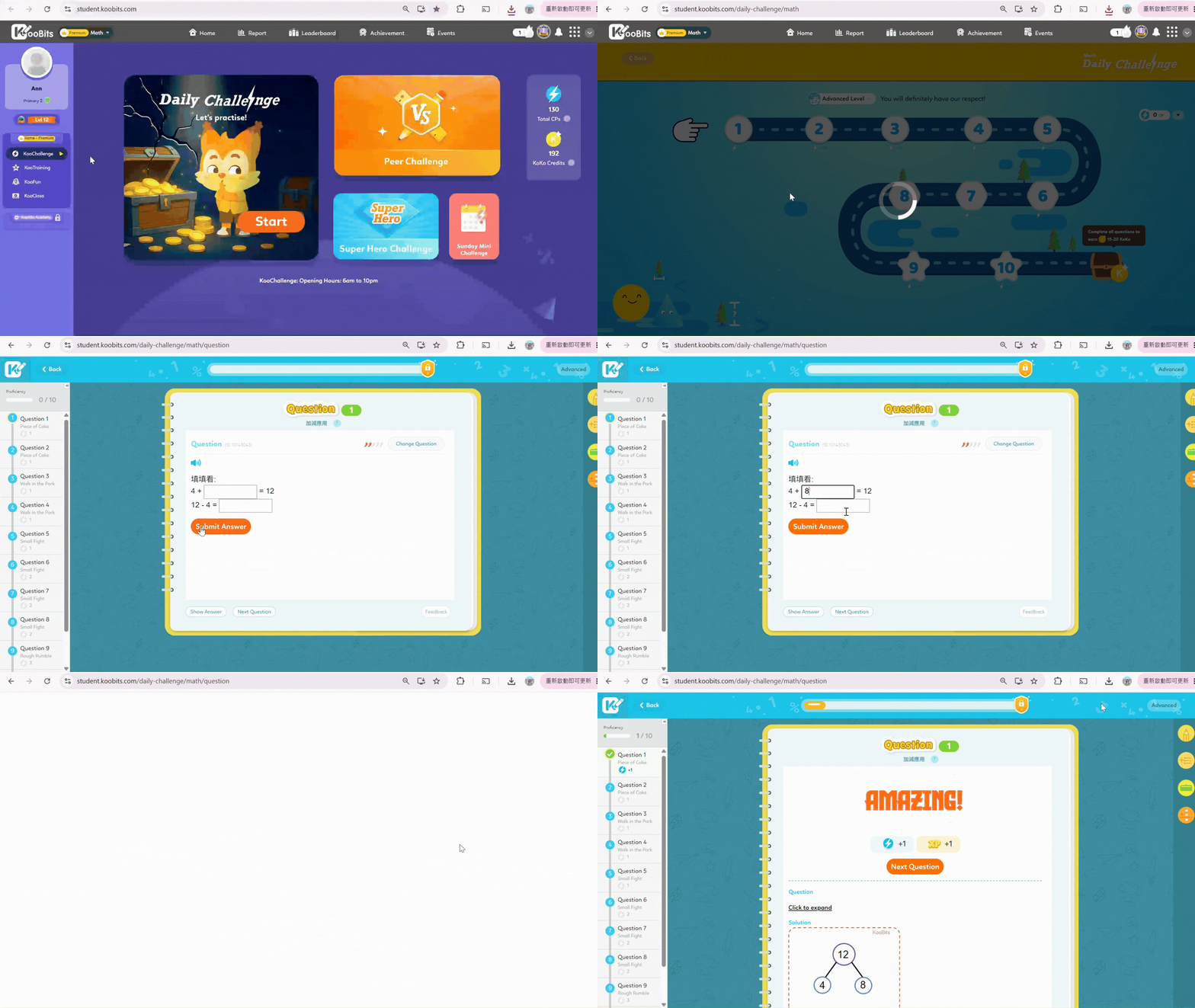
Streaks: recognising consistency
Streaks make regular participation visible. For a child who finds it difficult to get started, seeing their practice progress can be encouraging. The aim is to build a routine, not to protect a streak at all costs. Missing a day is perfectly fine.
Koko Credits: a little extra encouragement
Koko Credits are an in-platform reward that can make participation feel more rewarding. They can provide an initial reason to get started, while parents continue to recognise understanding, effort and independence. Avoid extending a session just to collect more credits.
Animated lessons and instant feedback: support when children get stuck
Short animated explanations help break down Maths concepts into smaller steps.
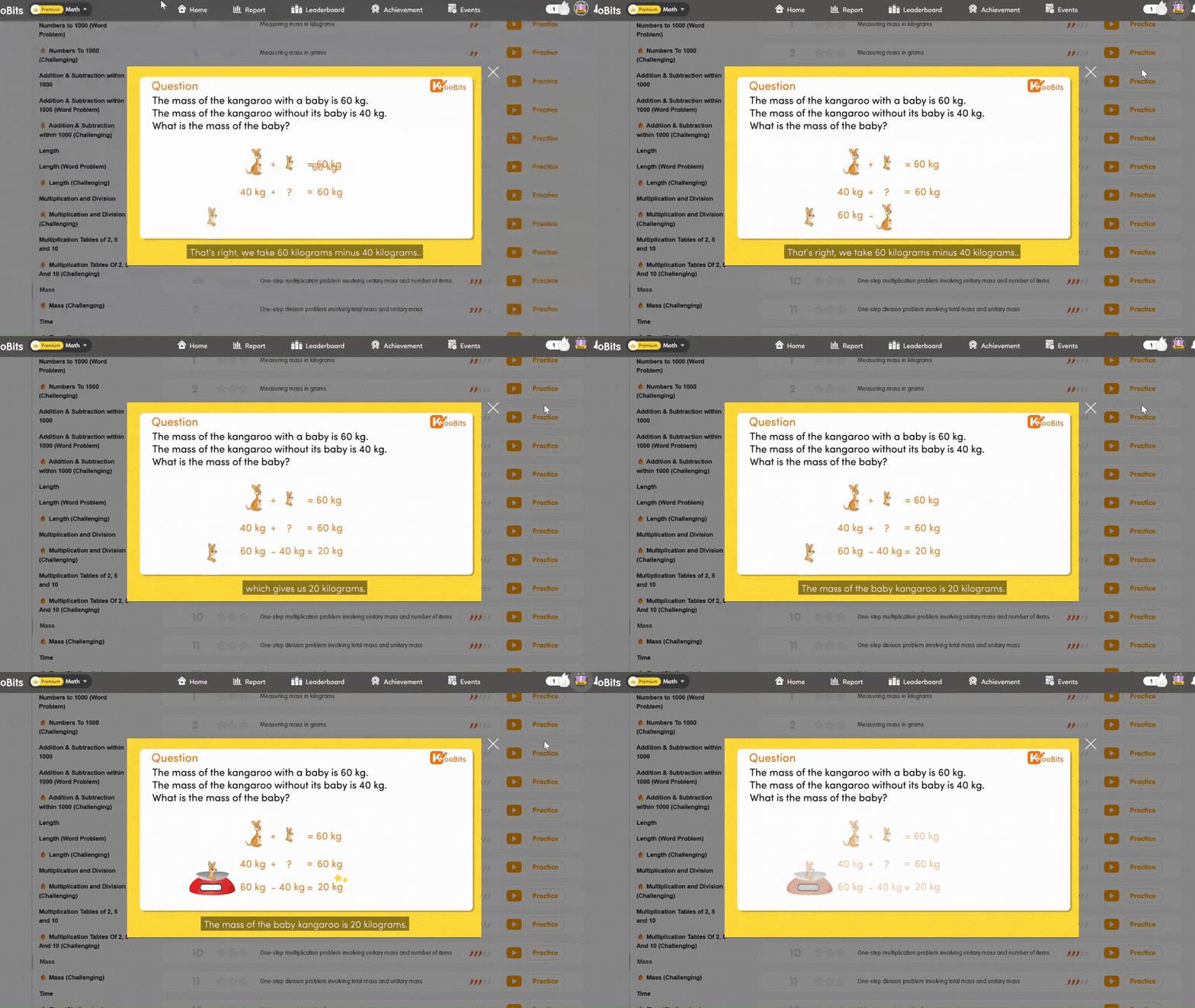
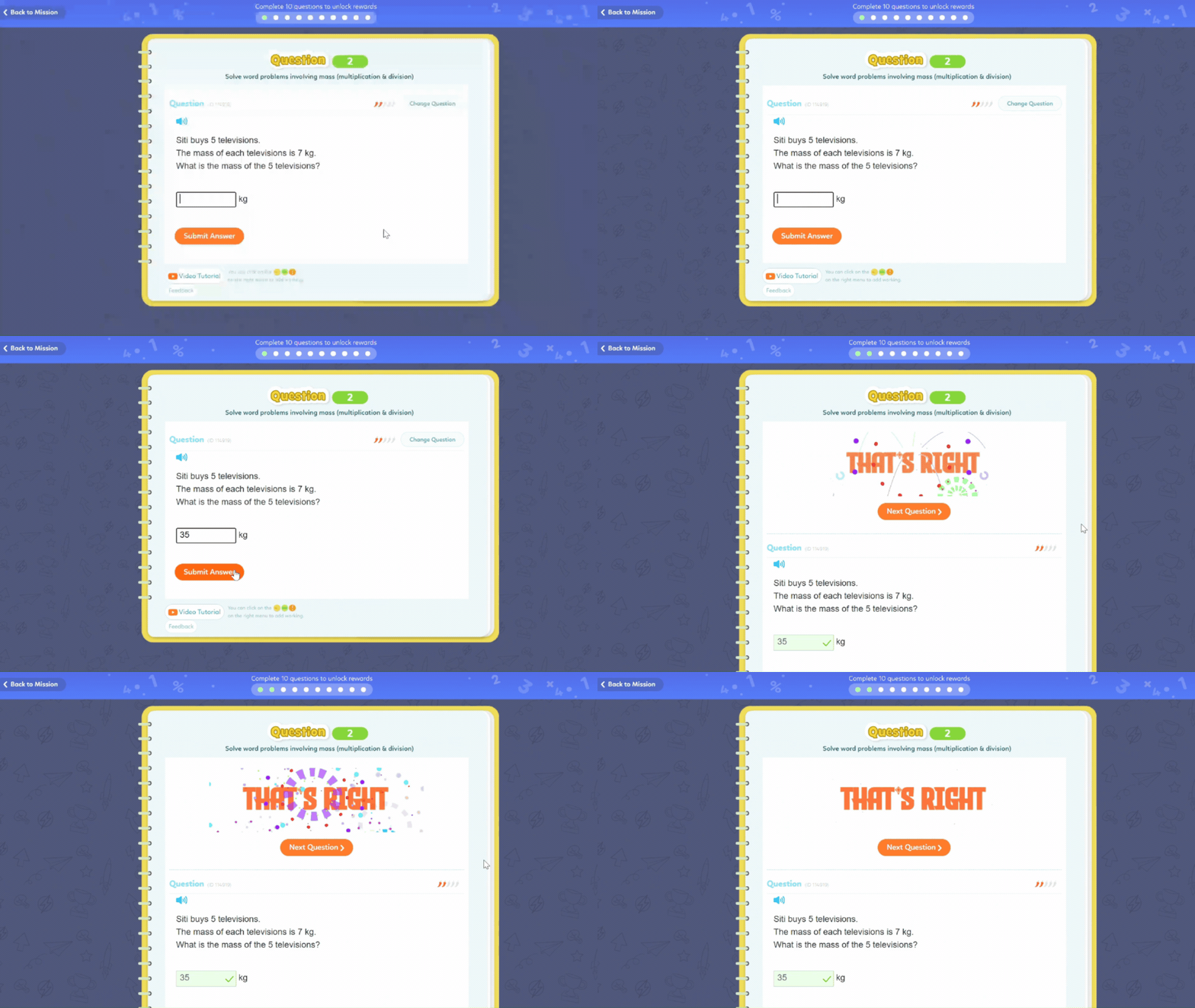
Instant marking gives children feedback on their answers, so they do not need to wait for a parent to check every question. When a concept is unclear, revisiting a lesson may be more useful than doing additional questions.
How can parents keep learning screen time balanced?
Educational screen time still counts as screen time. An engaging learning platform does not automatically reduce total device use. Parents can help by agreeing on a learning window, keeping devices away during meals and bedtime, and leaving time for sleep, movement, play and family activities.
If online practice starts causing arguments about stopping, reduce the session length or switch to an offline activity. The goal is a sustainable learning routine, not more minutes on a platform.
Try a smaller, more manageable Maths routine
Explore KooBits Maths and see whether its Daily Challenge and animated lessons suit your child’s learning needs. Agree on a short practice window together and observe how your child responds.
Explore KooBits MathsFrequently asked questions
How can I motivate my child to practise Maths without nagging?
Start with a manageable task, offer a choice of when to practise, and recognise effort rather than only correct answers. A predictable routine can make getting started easier.
Is 15 minutes of Maths practice a day enough?
Fifteen minutes can be a useful starting point for a reluctant learner. It is not a universal target or a replacement for classroom learning. Adjust the duration to the child’s needs and understanding.
What is the KooBits Daily Challenge?
The Daily Challenge is a set of 10 Maths questions selected according to a child’s learning progress, strengths, and areas for improvement. Children can complete it as part of a short daily practice routine.
How do streaks and Koko Credits motivate children?
Streaks recognise consistency, while Koko Credits provide an in-platform reward. Both can make progress more visible, but children should be encouraged to take breaks and focus on understanding rather than collecting rewards.
Can KooBits help parents manage screen time?
Parents can use the Daily Challenge as a clear stopping point within an agreed practice window. KooBits is a learning tool, not a guarantee of reduced screen time; families still need to set boundaries and balance online learning with offline activities.